Our Method, In Full
Most agencies describe their process in adjectives — “data-driven,” “results-focused,” “proven.” We'd rather show you the actual sequence, in enough detail that you could, in theory, run it yourself. If reading this convinces you it's not worth outsourcing, that's a fair outcome too.
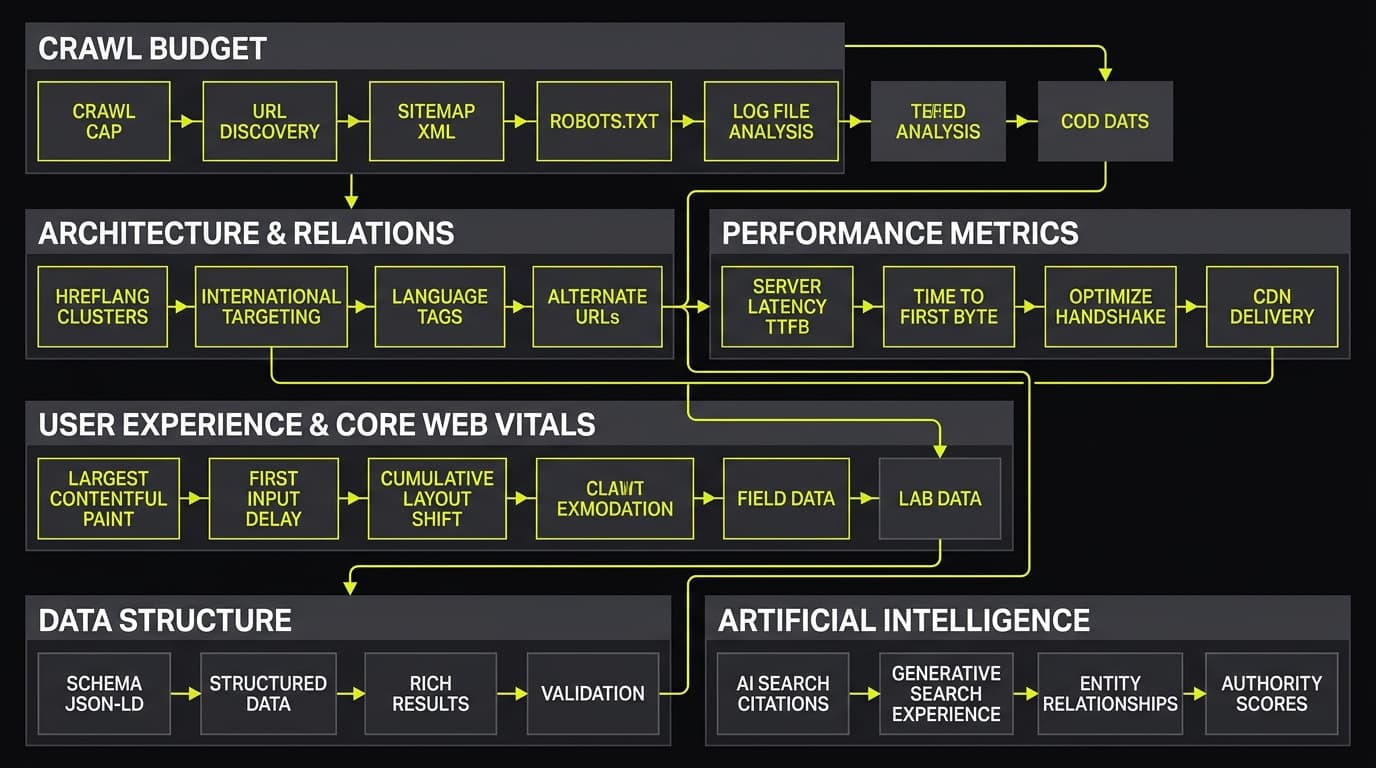
Step 1 — Technical audit
We crawl the site the way Googlebot does, not the way a dashboard summarises it. That means checking actual server response codes, redirect chains, canonical tag conflicts, and whether JavaScript-rendered content is actually visible to a crawler — not just assuming a client-side framework is fine because the page looks right in a browser.
Step 2 — Prioritisation
Not every fix matters equally. We rank issues by a rough cost-to-fix versus likely-traffic-impact estimate, and we say plainly when we're not certain — SEO forecasting is directional, not precise, and any agency promising an exact traffic number from a specific fix is guessing more confidently than the discipline allows.
Step 3 — Content and keyword mapping
We map keywords to search intent, not just to search volume — a page built for someone ready to buy needs different structure than a page built for someone still researching. Each target page gets one clear primary intent; we actively check for keyword overlap across your own site before publishing, because two pages competing against each other for the same term is a self-inflicted problem we've seen plenty of agencies create.
Step 4 — Content production
Written by people who've read your source material and, where relevant, your competitors' — not generated in bulk and lightly edited. Every piece gets an editorial pass checking factual claims, before publication, and increasingly, a pass checking whether the structure (clear answer up front, defined terms, comparison tables where relevant) makes the page usable by AI systems generating answers, not just by Google's classic ranking algorithm.
Step 5 — Technical implementation
Schema markup, internal linking, redirect implementation, hreflang for multi-country sites — done by the same team that ran the audit, not handed off to a separate implementation queue that loses context along the way.
Step 6 — Measurement and reporting
We report rankings and traffic, but also — where relevant — AI citation tracking: whether your pages are actually showing up as sources in ChatGPT, Perplexity or Google AI Overviews for the queries that matter to you. That's a newer measurement than classic rank tracking and one most agencies aren't set up to report on yet.
What we don't do
- ✕
We don't buy links from private blog networks or link farms.
- ✕
We don't publish AI-generated content without editorial review and fact-checking.
- ✕
We don't promise a specific ranking position — nobody controls that.
- ✕
We don't hold your domain, CMS access, or analytics hostage if you leave. Everything is registered to you from day one.
Why we're publishing this at all
Because most of what differentiates one SEO agency from another isn't secret technique — it's whether the process is actually followed consistently, on every account, every month. We'd rather compete on execution than on the illusion that our method is proprietary. If a competitor reads this and adopts the same structure, that's a reasonable outcome of publishing it.
See it in practice
Inspect a real live teardown or get an audit for your own domain.